About 800 years of tea history
In the Kamakura period, the priest Shōichi Kokushi, returning from Song-dynasty China, is said to have sown tea seeds in Ashikubo — the traditional beginning of Shizuoka tea. Honyama carries on that lineage as one of Shizuoka’s oldest tea regions.
A climate shaped by mountains and rivers
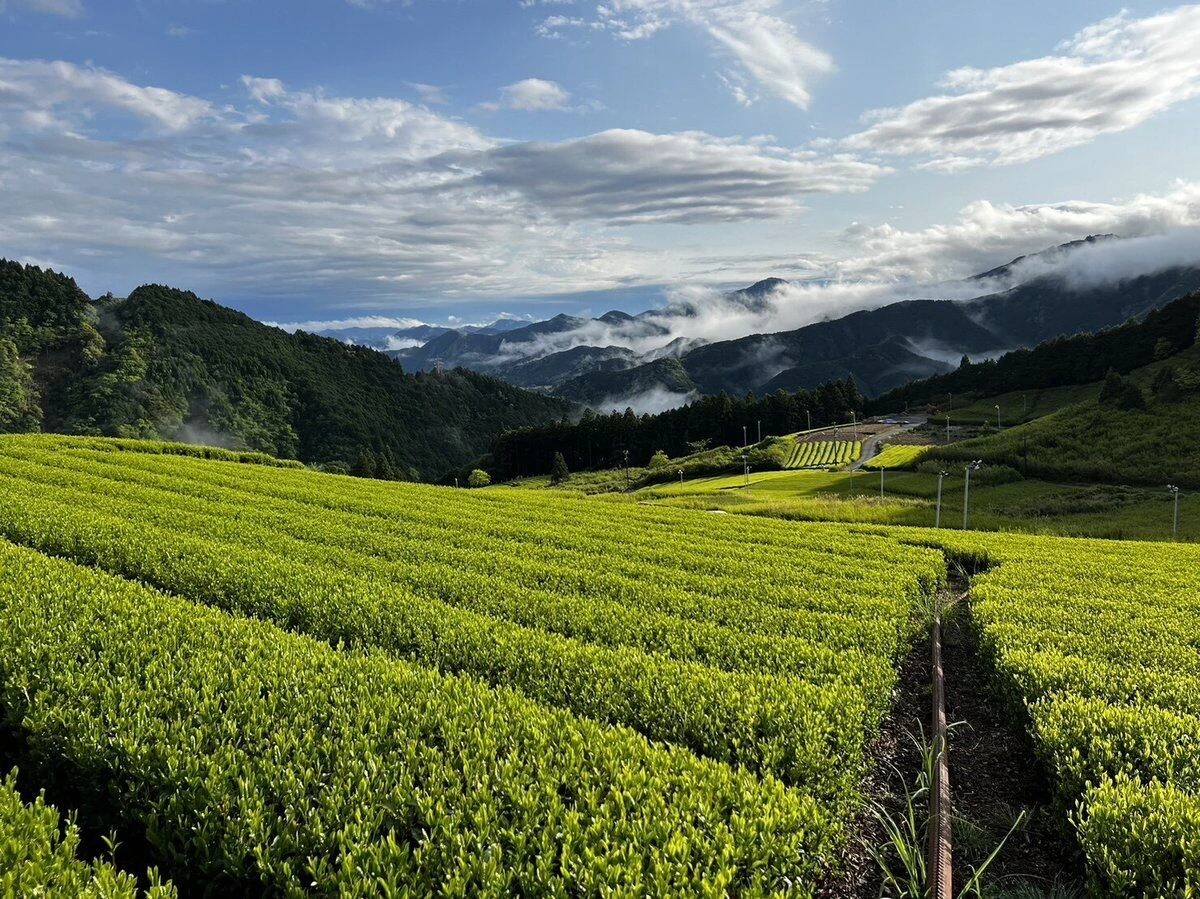
Tea fields spread across the mountains of the Abe River basin. Peaks that lead toward the Southern Alps, clear water, mist that gathers morning and evening, and wide temperature swings in the valleys. The leaves grow in a natural setting unique to this land.
Tea-making that starts from the soil
Honyama’s mountains are formed mainly from ancient seabed sediments that were lifted up over time. We consider how to grow the leaves while watching each field’s sunlight, temperature, humidity and soil. Even within one region, every field has its own character.
Skills inherited and refined
Looking at the leaves, touching them, checking their aroma. The work of growing, and the work of steaming, rolling and drying. Judging each day’s leaves has been handed down and refined through daily life with this land and its tea. Rooted in light-steamed sencha, we pursue a harmony of aroma, sweetness and astringency.
How our tea is made
Growing
Paying attention to the local climate and the daily changes in the leaves. Tea-making begins with watching the fields.
Processing
Adjusting steaming, rolling, drying and firing to the condition of the leaves, to draw out the character of each tea.
Inspection & tasting
Checking the leaf’s appearance, aroma, liquor colour and flavour. The makers’ senses judge the finish.
Delivery
Delivering the tea we grew and made ourselves, directly. Keeping the distance between field and cup short and straight.
The character of this land, and the work people have built up, in one cup.