Abe Honyama, Shizuoka. On this land spread across the mountains, we explore what tea’s aroma can become.
We want to share the appeal of the leaves grown here not only as sencha but as oolong and black tea. Checking the character of each cultivar and reading the changes in the leaves, we draw out their aroma.
What we aim for is tea you want to sip again just to confirm its aroma. A cup to enjoy not only for the aroma rising from it, but for how it spreads on the palate and the finish after you drink.
Method and craft
A mountain setting that echoes the world’s tea regions.
In Honyama, where we make tea, there are places at elevations close to parts of Darjeeling, or to the mid-elevation gardens of Ceylon known as “medium grown”.
A mountain setting that grows fragrant tea. We draw out that land’s potential as the aroma and flavour of oolong and black tea.
Not reproducing famous overseas teas as they are, but reaching for a flavour that could only come from Honyama. Our tea-making begins by facing the land.
Adding cultivars, widening the choice of aromas.
Which cultivar, made into what kind of tea? The possibilities of tea-making start from choosing the tea plants for the field.
At THE CRAFT FARM, we are gradually increasing the cultivars we grow. Checking the character of each leaf, we explore what aromas and flavours this land can express.
Savouring one cultivar’s character deeply, or layering different characters to make a new cup. We turn the diversity of cultivars into the pleasure of choosing tea.
Reading the leaf’s changes, opening its aroma.
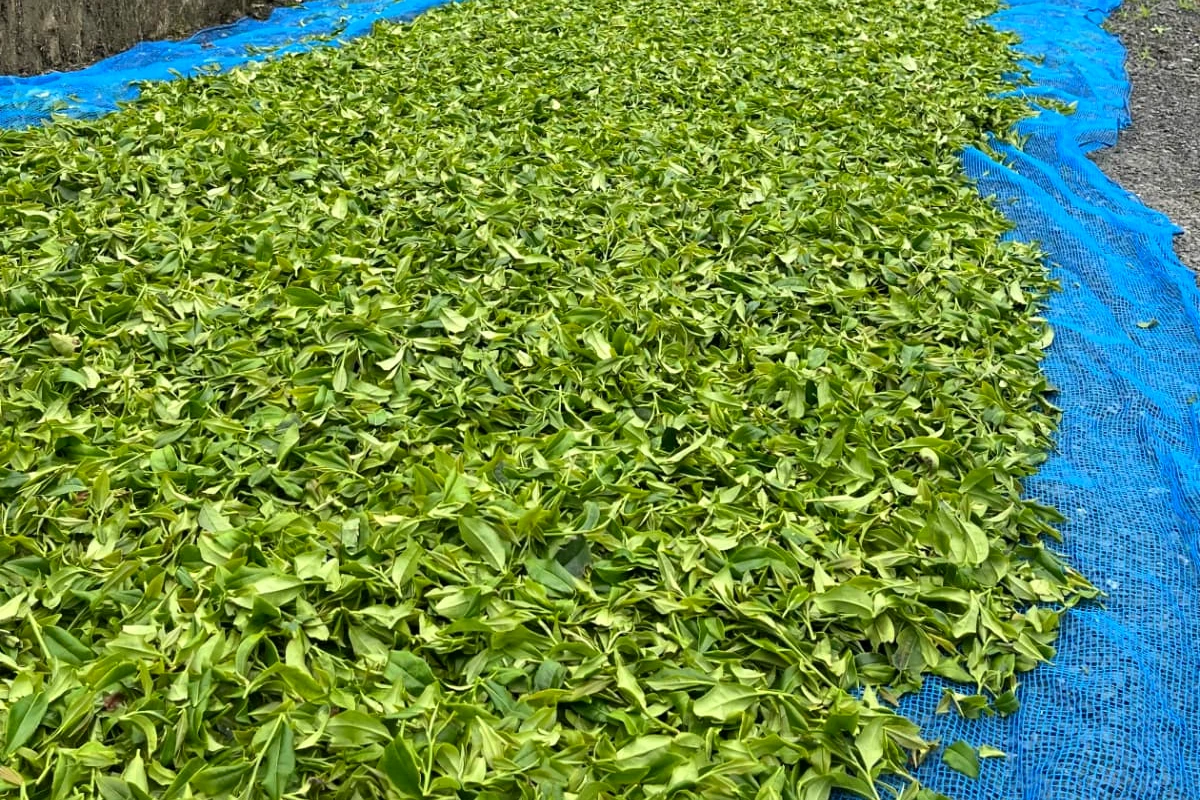
“Withering”, which lets picked leaves wilt, and “fermentation”, which advances the oxidation of the leaf. In oolong and black tea, these steps shape aroma and flavour.
Checking the condition of the leaves and the changes in aroma, we judge how far to go and where to finish. We layer handwork suited to the character of each raw leaf.
Oolong — slowly following a shifting aroma.
Oolong is finished by stopping the oxidation of the leaf partway. Depending on how oxidation is advanced and finished, many expressions of aroma and flavour emerge.
First, taste it with nothing added, as if tracing its aroma. Enjoy how it changes little by little from the first infusion to the second. A cup to take time with, between courses or in a moment where the tea itself is the focus.
Black tea — enjoying layers of aroma and flavour.
Black tea is made by rolling withered leaves and advancing oxidation. Making the most of the leaf’s character, we balance aroma, depth of flavour, astringency and finish.
Savoured slowly and straight, or paired with milk and spices. A cup for delicate aroma, or one with satisfying body. Choosing to suit your mood and the way you drink widens the pleasures of black tea further.
Layering characters to create new flavour.
Enjoying one tea as it is, and blending different teas. Both are important ways to share the appeal of the material.
Layering one leaf’s aroma with another leaf’s rounded flavour. Adding depth of finish to a light mouthfeel. Reading each character and considering the harmony of the whole — that is our blending.
From combinations of teas to expressions with herbs and spices. Carefully selecting materials and checking the proportions, we search for flavours that no single tea could offer.
Ways to enjoy it
Enjoy the aroma to suit the mood of the day.
Savour the character of the leaf as it is. Brew it hot. Make it cold. Layer it with milk, fruit or spices.
On a morning when you want to slow down, on an afternoon when you want a change. Changing how you brew and what you pair it with, find the cup that feels right for you.
In a teapot, a moment spent with aroma.
Brew it in a pot or kyusu, and first taste it straight. Pouring the water and waiting for the aroma to rise is part of the pleasure of tea.
Oolong over successive infusions, black tea sipped slowly. Feel how its expression changes with temperature and time. Comparing teas of different cultivars and methods, little by little, you may find a new favourite.
Iced, or as a tea soda, light and bright.
Oolong and black tea brewed cold and enjoyed in a glass. There is also tea soda: strongly brewed tea combined with sparkling water.
Add a squeeze of citrus, or seasonal fruit. Centred on the tea’s aroma, adjust sweetness and strength to your taste. A refreshing pleasure for a pause on a hot day, or a cup beside a meal.
With milk or spices, a cup to your taste.
Milk tea made not only with black tea but with oolong, too. Choose the leaf, brew it a little strong, and enjoy the balance between the mellowness of milk and the aroma of the tea.
Making chai with ginger, cinnamon or cardamom is another way. Changing the type of milk and how you sweeten it little by little, there is pleasure in finding the combination that feels right for you.
With food and sweets, pairing aromas.
With morning bread, with afternoon baked sweets, with a tart of seasonal fruit. Rather than only tasting the tea on its own, we also recommend choosing it by what it will be paired with.
Will it layer aromas, lift sweetness, or close a meal cleanly? Even the same tea can reveal different charms depending on what it meets. From your usual table or snack time, widen the pleasures of tea.
The aroma of Honyama, for everyday moments.
For time spent slowly alone, and for a table shared with others.
Savouring the character of the leaf. Trying a different way to brew. Enjoying new combinations.
Aromas born of land and handwork, making everyday moments a little richer. That is the cup we want to deliver.
Please check availability, specifications and prices on our official site or by enquiry.