Green spreading across the bowl. The aroma that rises as you whisk. On the palate, a rounded umami and gentle bitterness.
Time spent slowly savouring matcha, a cup enjoyed with milk, a spoonful added to sweets. Turning tea into powder makes the ways of delivering its aroma and flavour even freer.
At THE CRAFT FARM, centred on matcha, we widen the pleasures of a life with tea through sencha, hojicha, black tea and jasmine tea powders.
The land and history that nurture matcha
Honyama, a region linked to the history of the tea ceremony.
Tea-making in Honyama, Shizuoka, is said to have begun when the priest Shōichi Kokushi sowed tea seeds in Ashikubo in the Kamakura period.
The area also has the recorded tradition of “Ochatsubo-zume Goyō”, in which tencha — the raw material of matcha — was packed into tea jars, stored, and delivered to Tokugawa Ieyasu.
Honyama is a land closely tied not only to sencha but to the tea ceremony. The long history of a region that has lived with tea is an important background as we think about matcha today.
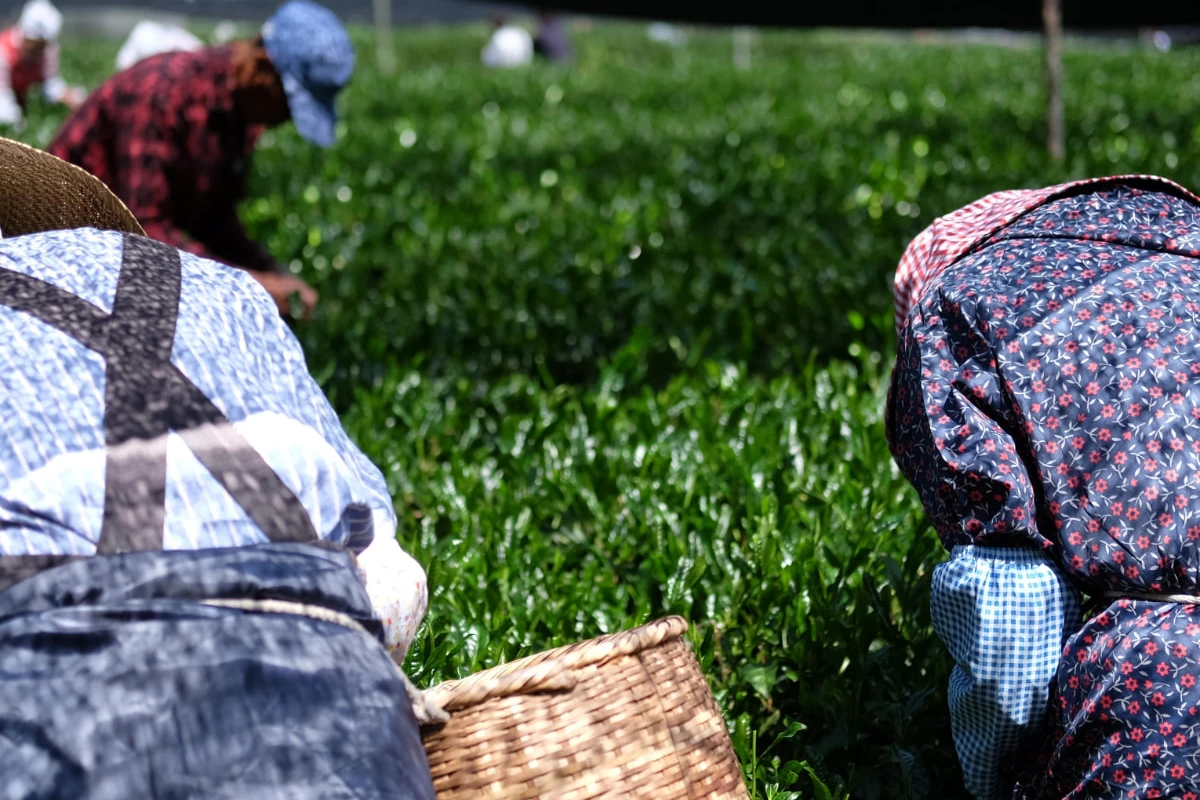
Mountain mist and well-drained soil grow fine leaves.
The mountains of Honyama spread along the Abe and Warashina river basins. Mist that gathers morning and evening softens the sunlight, and tea buds grow amid wide swings between day and night temperatures.
Land blessed with rain, where soil mixes with stone and drains well. These natural conditions are the foundation for tender leaves and fragrant tea.
Fine matcha starts with growing the leaves that become its raw material. Honyama’s blessed climate, combined with the practice of growing under shade and the skill of processing, produces a matcha whose aroma and umami can be savoured.
Method and craft
Matcha’s flavour, crafted from the field.
Matcha is not simply sencha ground into powder.
Its raw material is “tencha”. Leaves grown in fields covered to block the sunlight are steamed and dried without rolling. Finely grinding the finished tencha makes matcha.
Green colour, rounded umami, rich aroma. Its appeal is shaped not only by the grinding, but by how it is grown in the field and how the raw material is prepared.
Even as powder, the leaf’s character leads.
We make powder not only for convenience. It is also to enjoy the aroma and flavour of tea within drinks and foods.
What aroma do you want to use? What do you want to pair it with? What we cherish is the character of the original tea.
Whether paired with milk or added to sweets, tea should never end up as mere colouring. We deliver ways to enjoy it in which every bite still tastes of that tea.
Each powder, its own character
Matcha — green colour and rounded umami.
A tea born from tencha, for enjoying rich aroma, umami and gentle bitterness. First, whisk it and taste it as it is. When adding milk or sweetness, look for a balance where the matcha’s presence still comes through.
Sencha powder — fresh flavour for the everyday table.
Sencha finely ground into a powder, for enjoying the leaf’s fresh flavour, umami and astringency. A sencha character distinct from matcha, for lattes, sweets and cooking.
Hojicha powder — toastiness in a spoonful.
A powder for enjoying the toastiness of roasting. Pair it with milk or cream, or knead it into dough. The pleasure of layering hojicha’s aroma into drinks and sweets.
Black tea powder — black tea’s flavour, in dough and cream.
A powder that brings in the aroma and flavour of black tea. Not only for milk tea, but for cookies, cakes and cream. Changing the ingredients and sweetness, enjoy a bite scented with black tea.
Jasmine tea powder — a new expression in floral aroma.
A powder for enjoying the bright aroma of jasmine tea. Pair it with milk, or add a little to almond jelly or cream. A way to add a floral aroma to your usual cup or dessert.
Ways to enjoy it
Not only whisked — mixed, baked and sprinkled.
For time spent drinking tea, and for time spent making sweets.
Choose a powder from the mood of the day or the ingredients you want to pair.
Whisk matcha, a bowl just for you.
Put matcha and hot water in a bowl and move the chasen whisk. First, add nothing, and slowly savour its aroma and umami.
Add a single wagashi, or pair it with a favourite baked sweet. Not only on special days, but in everyday life, make time to spend with matcha.
With milk, a latte to suit your mood.
The umami of matcha, the freshness of sencha, the toastiness of hojicha. Black tea and jasmine tea offer cups with different aromas, too.
Cow’s milk, soy milk, oat milk — choose the milk to your taste. Adjusting the strength of the tea and the sweetness little by little, find the balance that feels right for you.
Mixed and baked, sweets scented with tea.
Mix it into pancake or cookie batter. Add it to cheesecake or ice cream. The same sweet changes its impression when the tea changes.
Try matcha with white chocolate, hojicha with brown sugar, black tea with citrus peel. Thinking about combinations of aroma is one of the pleasures of making sweets.
A sprinkle that gives an everyday dish the face of tea.
Sprinkle a little matcha or hojicha powder over vanilla ice cream. Combine matcha or sencha powder with salt to serve with tempura or grilled vegetables.
Not only for sweets, but for meals too. Start with a small amount and enjoy how the aroma and gentle bitterness of tea changes your usual dish.
For smooth results.
When mixing into drinks or cream, sift if needed and first blend into a paste with a little water or hot water, then add the other ingredients gradually. Finely ground tea powder may settle over time. Stir lightly again as you enjoy it.
Taking the places to enjoy tea beyond the bowl.
As a bowl of tea, facing its aroma.
As a spoonful of ingredient, creating new flavours.
Tea nurtured by land and handwork, closer and freer. From the everyday cup to the dish on the table, we widen the pleasures of tea.
Please check availability, specifications and prices on our official site or by enquiry.